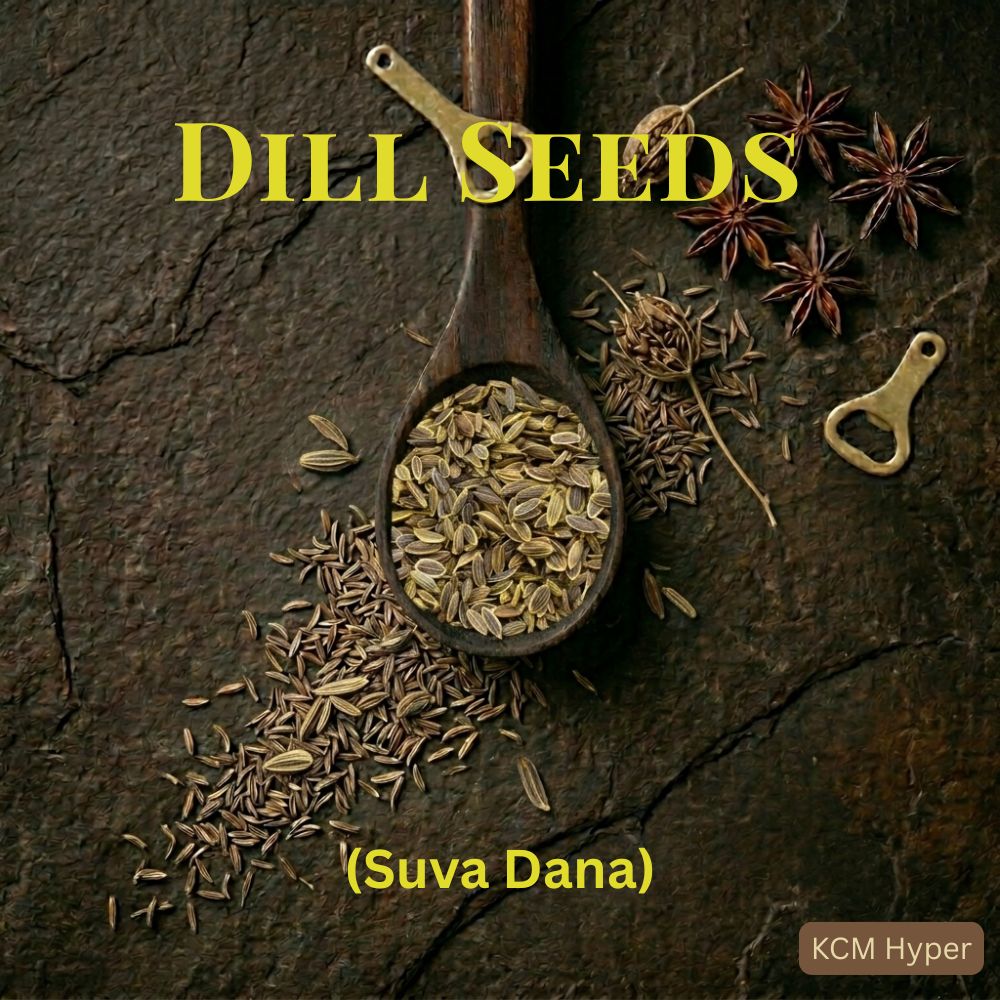
Dill Seeds (Suva Dana)
The Gentle Giant of Digestive Wellness
Dill seeds, or Suva Dana, are renowned in Indian households for their cooling properties and are a cornerstone of traditional post-natal and digestive health care.
🌿 Overview
Dill seeds are small, flat, and oval-shaped with a light brown color. They possess a flavor profile that is a unique blend of citrus and grass, with a subtle sweetness similar to caraway but milder. They are highly valued for both their culinary versatility and medicinal strength.
🏺 Heritage & Origin
Used since the times of ancient Rome and Greece as a symbol of vitality, Dill has a long history in India as "Suva." It is famously used in "Gripe Water" formulations for infants and is a primary ingredient in Ayurvedic digestive decoctions.
💪 Health Benefits
- Excellent for relieving flatulence and indigestion
- Known to support lactation in nursing mothers
- Provides a calming effect on the digestive tract
- Contains essential oils that have antibacterial properties
🍳 Popular Uses
- Dals and vegetable stir-fries (especially with spinach)
- Pickles and vinegar-based preserves
- Suva-Baajra rotis and savory breads
- Post-meal digestive mixes (Mukhwas)
👨🍳 How to Use
Dill seeds develop a deeper, nuttier flavor when lightly toasted. In Indian cooking, they are often added to the 'tadka' (tempering) or crushed and mixed into doughs for an earthy fragrance.
📦 Storage Tips
Dill seeds should be kept in an airtight container in a cool, dry area. When stored properly, they retain their potent aroma and medicinal properties for up to a year.
❓ Frequently Asked Questions
1. Can I use Dill seeds instead of Dill leaves?
The seeds have a much stronger, more pungent flavor than the fresh leaves. Use them sparingly if substituting.
2. Is Dill seed water good for babies?
Traditionally, cooled dill seed water (Suva ka pani) has been used to help soothe colic in infants, though it's always best to consult a professional.
3. What is the difference between Dill and Fennel seeds?
Dill seeds are flatter and have a more pungent, slightly bitter edge compared to the sweet, licorice-like taste of Fennel.
4. How do I make Suva tea?
Boil one teaspoon of seeds in water for 5 minutes, strain, and drink for instant digestive relief.
Explore more spices: Ajwain | Mustard Seeds | Fenugreek
Comments
Post a Comment