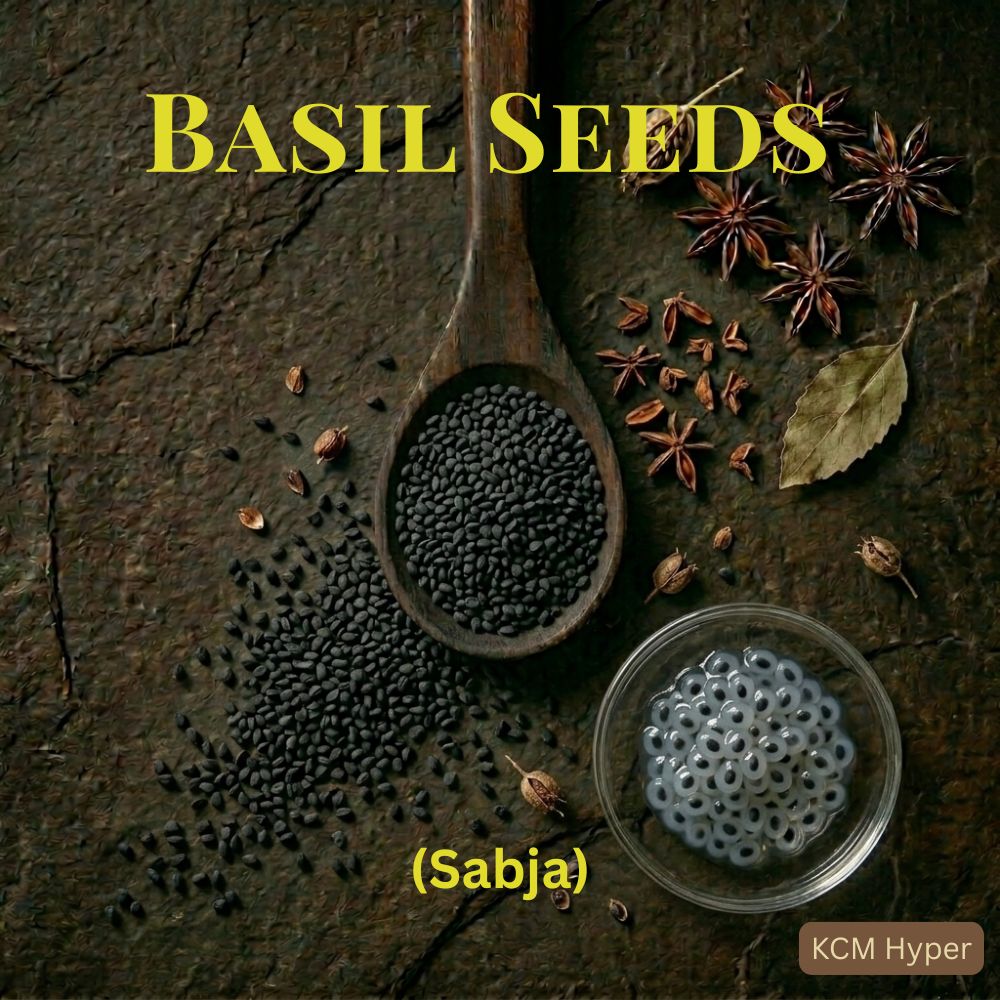
Holy Basil Seeds (Sabja)
The Natural Cooling Superfood
Sabja seeds are one of nature's best coolants. They are famous for their ability to reduce body heat and provide a refreshing texture to summer drinks and desserts.
🌿 Overview
Holy Basil seeds, commonly known as Sabja, are tiny black seeds that look similar to chia seeds but have different benefits. When soaked in water, they swell up to form a translucent, gelatinous layer. They have a mild, nutty flavor that easily absorbs the taste of the liquid they are in.
🏺 Heritage & Origin
Sabja seeds come from the Sweet Basil plant (Ocimum basilicum), which is native to India and Southeast Asia. For centuries, they have been a staple in Ayurvedic medicine and Unani traditions, prized for their ability to balance the body's internal temperature.
💪 Health Benefits
- Naturally reduces body heat and acidity
- Rich in dietary fiber, aiding in digestion and satiety
- Helps in managing blood sugar levels
- Provides a detoxifying effect on the stomach
🍳 Popular Uses
- Falooda and Rose milkshakes
- Lemonades and Sherbets (Nimbu Paani)
- Added to puddings and yogurt bowls
- Traditional Ayurvedic health tonics
👨🍳 How to Use
Sabja seeds must be soaked in water for at least 15–20 minutes before consumption. They will swell to about 10 times their size. Once they have bloomed, you can add them directly to your favorite beverages or desserts.
📦 Storage Tips
Store in a cool, dry place in an airtight container. Keep the seeds away from moisture until you are ready to use them, as even a small amount of humidity can cause them to clump.
❓ Frequently Asked Questions
1. Are Sabja seeds the same as Chia seeds?
No. While they look similar, Sabja seeds are jet black and must be soaked to be eaten, whereas Chia seeds are grey/mottled and can be eaten dry. Sabja is primarily a coolant.
2. Can I eat Sabja seeds for weight loss?
Yes, because they are high in fiber, they keep you feeling full for longer, which can help control appetite.
3. Do I need to boil them?
No, boiling is not necessary. Plain water at room temperature is enough to make them swell and bloom.
4. How many times a day can I have Sabja?
A tablespoon of soaked seeds once or twice a day is usually sufficient for most people.
Explore more products: Ajwain | Mustard Seeds | Fenugreek
Comments
Post a Comment