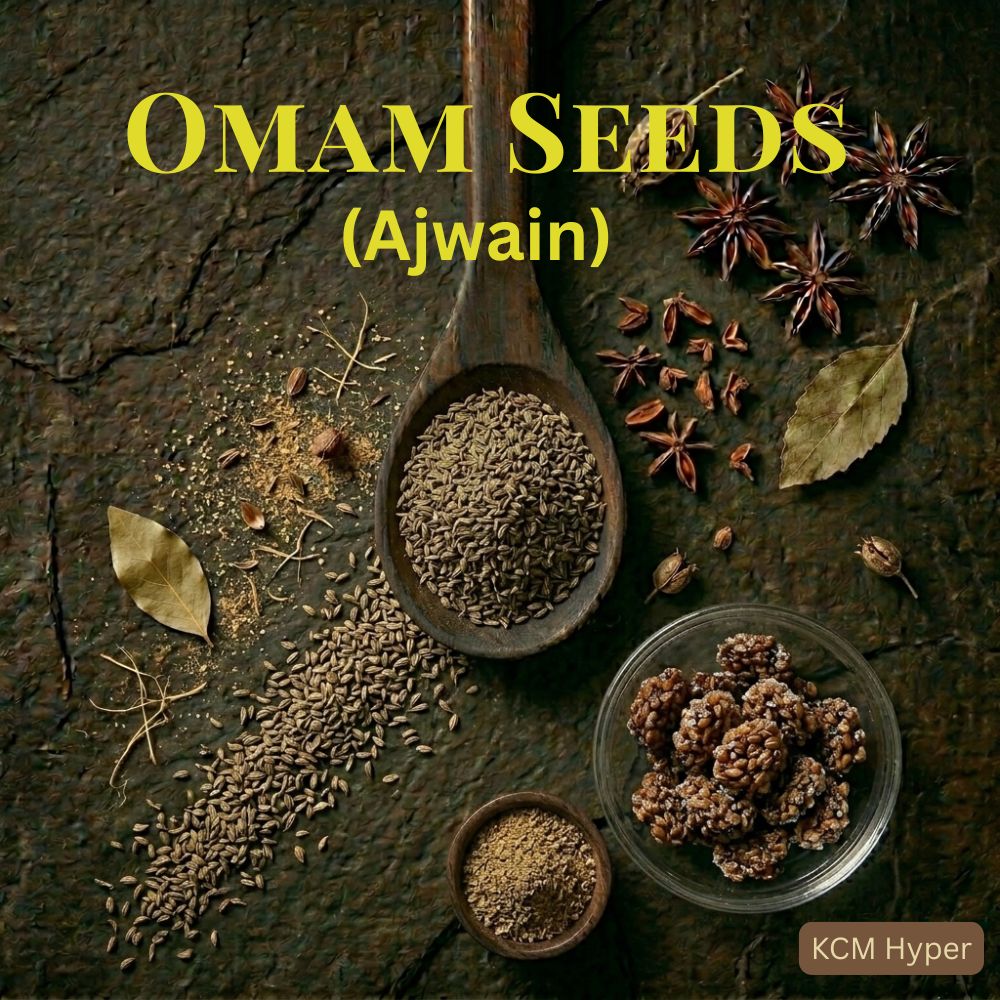
Omam Seeds (Ajwain)
The Instant Digestive Reliever
Omam seeds are a powerhouse of thymol, providing an almost instant remedy for stomach discomfort while adding a sharp, thyme-like fragrance to savory dishes.
🌿 Overview
Omam seeds, commonly known as Ajwain or Carom seeds, are small, bitter, and highly pungent. Though they look like tiny seeds, they are actually the fruit of the herb. They possess a flavor profile that is strikingly similar to thyme but with a much more intense heat and aroma.
🏺 Heritage & Origin
Native to India and the Eastern Mediterranean, Ajwain has been a staple of the Indian spice box for millennia. It is deeply rooted in Ayurveda as a "deepana" (appetizer) and "pachana" (digestive) herb, often used in home remedies for everything from colds to toothaches.
💪 Health Benefits
- Provides rapid relief from acidity and flatulence
- Helps clear nasal congestion and respiratory paths
- Contains anti-bacterial and anti-fungal properties
- Aids in improving appetite and metabolic health
🍳 Popular Uses
- Tempering for Dals and vegetable curries
- Mixed into dough for Parathas, Pooris, and Namak Pare
- Omam Water (Ajwain Ark) for digestive wellness
- Flavoring for pakoras and other fried snacks to aid digestion
👨🍳 How to Use
Omam seeds are best used in the initial tempering (tadka) with hot oil or ghee to mellow their sharp bitterness. You can also dry roast them to sprinkle over yogurt or chew a small pinch raw with salt for immediate stomach relief.
📦 Storage Tips
Store in an airtight container in a cool, dark place. The strong aroma of Ajwain can easily transfer to other spices, so ensure the lid is sealed tightly to maintain its potency.
❓ Frequently Asked Questions
1. Is Omam the same as Celery seed?
They look similar, but they are different. Omam (Ajwain) has a much stronger, sharper, and hotter taste compared to the milder celery seed.
2. Why is it used in fried foods?
Since fried foods can be heavy, Ajwain is added to the batter to help the body digest the fats more efficiently and prevent bloating.
3. How do I make Omam water?
Boil 1 teaspoon of seeds in 2 cups of water until it reduces to half. Strain and drink warm for a natural digestive tonic.
4. Can children consume Ajwain?
Yes, in very small quantities (usually as Omam water), it is a traditional remedy for infant colic and stomach aches.
Explore more spices: Mustard Seeds | Fenugreek | Kalonji
Comments
Post a Comment