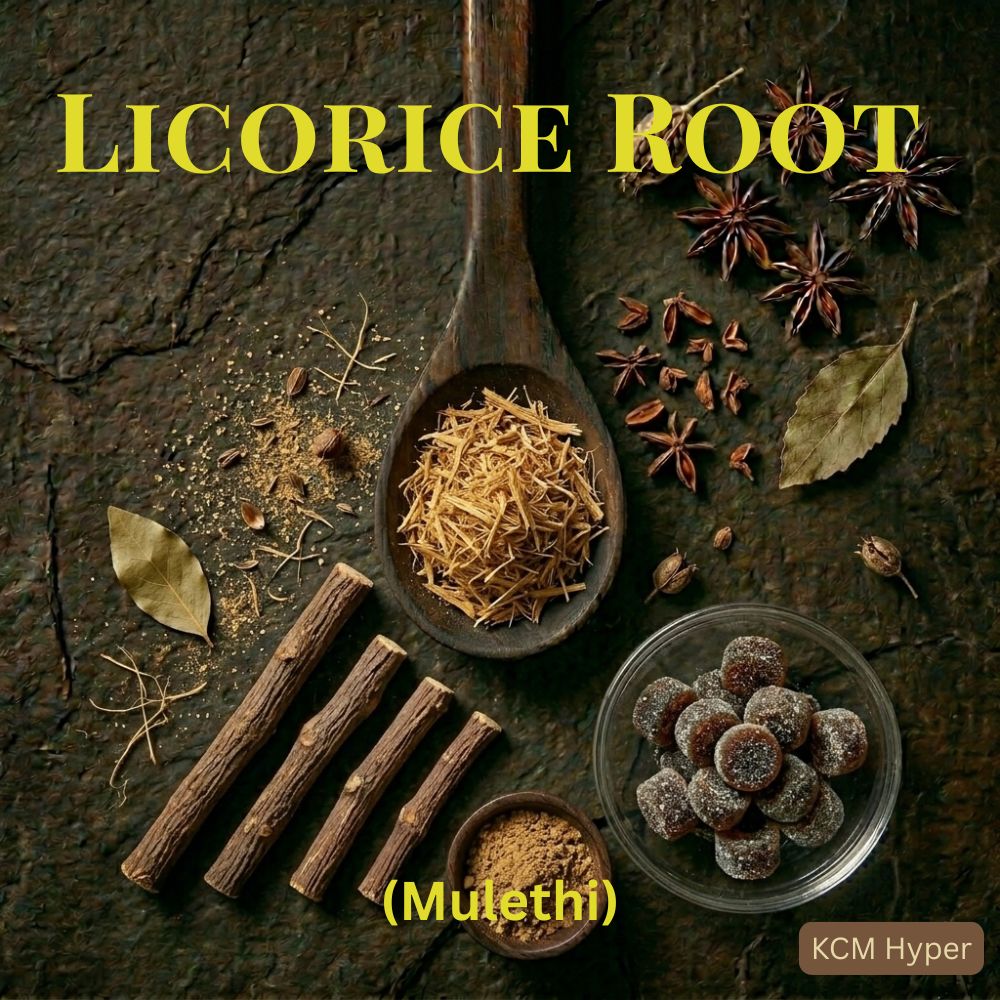
Licorice Root (Mulethi)
The Ancient Sweetener with Healing Power
Mulethi is a legendary herb in Ayurveda, prized for its natural sweetness (up to 50 times sweeter than sugar) and its remarkable ability to soothe the throat and respiratory system.
🌿 Overview
Licorice root, or Mulethi, is the root of the Glycyrrhiza glabra plant. It has a distinct woody appearance and a flavor profile that is sweet, slightly salty, and reminiscent of anise. It is widely used in India as a natural candy and a potent herbal remedy.
🏺 Heritage & Origin
Mulethi has been used for over 4,000 years, appearing in ancient Egyptian, Chinese, and Indian texts. In India, it is a staple of Ayurvedic formulations (known as Yashtimadhu), often used to balance the body's 'pitta' and support digestive and respiratory health.
💪 Health Benefits
- Relieves sore throat, cough, and congestion
- Soothes stomach ulcers and acid reflux
- Boosts immunity and respiratory health
- Acts as a natural anti-inflammatory agent
🍳 Popular Uses
- Herbal teas (Kadha) for cold and flu relief
- Chewed raw as a natural throat lozenge
- Flavoring for tobacco, candies, and beverages
- Used in skincare face masks for brightening
👨🍳 How to Use
You can boil the dry root in water to create a soothing tea or grind it into a fine powder to mix with honey. For immediate throat relief, simply chew on a small piece of the root to release its sweet, medicinal juices.
📦 Storage Tips
Store Mulethi sticks or powder in a cool, dry place in an airtight container. The roots are very sturdy and can maintain their potency for several years if kept away from moisture.
❓ Frequently Asked Questions
1. Can I swallow the root after chewing?
The root itself is very fibrous and woody. Most people chew it to extract the juice and then discard the fiber.
2. Is Mulethi safe for everyone?
While beneficial, people with high blood pressure should consume it in moderation as it can affect sodium and potassium levels.
3. Can I use it for skin?
Yes! Mulethi powder is widely used in Ayurveda to treat hyperpigmentation and brighten the skin when used as a face pack.
4. Does it contain sugar?
No, its sweetness comes from glycyrrhizin, a natural compound that is not a sugar, making it a unique flavor enhancer.
Explore more products: Ajwain | Mustard Seeds | Fenugreek
Comments
Post a Comment